

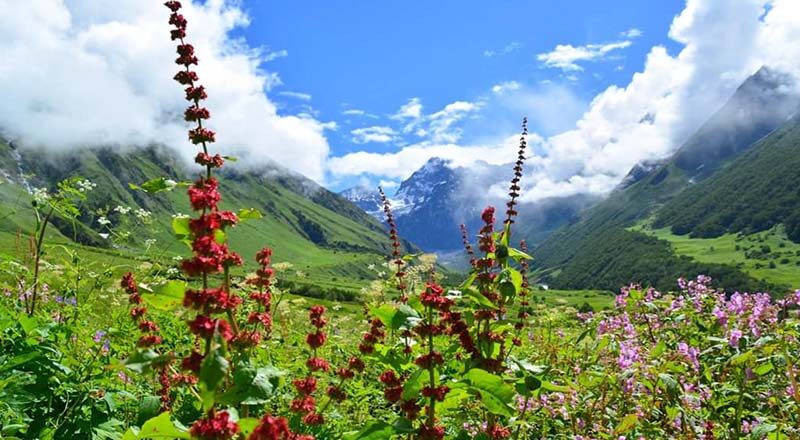
The Valley of Flowers trek is often called the most beautiful monsoon trek in India, and rightfully so. This UNESCO World Heritage Site in the Garhwal Himalayas transforms into a breathtaking carpet of over 600 alpine flower species every July and August. Having led groups to this floral paradise for over two decades, I can tell you that nothing quite prepares you for the moment when the mist lifts and thousands of Brahma Kamal, Blue Poppies, and Cobra Lilies reveal themselves against the backdrop of snow-capped peaks.
What is Valley of Flowers?
The Valley of Flowers is a high-altitude Himalayan valley located in the Chamoli district of Uttarakhand, within the Nanda Devi Biosphere Reserve. Spanning approximately 87.50 square kilometers and measuring 8 km long by 2 km wide, this alpine wonderland sits at an elevation of 3,352 to 3,658 meters above sea level along the banks of the Pushpawati River, a tributary of the Alaknanda.
The valley was discovered in 1931 by British mountaineer Frank Smythe while returning from a successful expedition to Mount Kamet. Overwhelmed by its beauty, he called it “a paradise on Earth” and later wrote a book documenting its floral treasures. In 1982, the valley was declared a National Park, and in 2005, it received UNESCO World Heritage Site status alongside the Nanda Devi National Park.
Why is Valley of Flowers Special?
What sets this valley apart from other Himalayan treks is its remarkable biodiversity. The valley is home to:
- 600+ species of flowering plants, many endemic to the region
- 13 species of mammals including Snow Leopard, Himalayan Black Bear, Musk Deer, and Bharal
- 114 species of birds including the Himalayan Monal (state bird of Uttarakhand)
- Over 400 medicinal plants including the threatened Valeriana jatamansi
The valley transforms dramatically with each week of the monsoon season. In late June, you’ll find snow-melt flowers and early primulas. By mid-July, the famous Blue Poppies begin blooming near Hemkund Sahib. August brings the sacred Brahma Kamal into full bloom, and by September, asters and bistortas paint the valley in purple and pink hues.
Best Time to Visit Valley of Flowers
The Valley of Flowers National Park opens approximately from June 1 to October 4 each year, though exact dates depend on snow conditions. However, not all months offer the same experience. Here’s what to expect:
Month-by-Month Bloom Guide
| Month | Bloom Status | What You’ll See | Weather |
|---|---|---|---|
| June | Early Bloom (30%) | Primulas, early orchids, snow-melt flowers, some snow patches | Cool, occasional rain, 10-18°C |
| July | Peak Bloom (70-80%) | Blue Poppies, Cobra Lilies, Potentillas, Geraniums, Marsh Marigolds | Monsoon rains, 8-15°C, misty mornings |
| August | Full Bloom (90-100%) | Brahma Kamal, maximum flower diversity, 600+ species visible | Heavy monsoon, 7-14°C, afternoon showers |
| September | Late Bloom (50-60%) | Asters, Bistortas, fading flowers but clearer skies | Post-monsoon clarity, 5-12°C, better views |
Our Recommendation
For flower enthusiasts: Visit between mid-July to mid-August for maximum bloom diversity. This is when the valley truly becomes a living carpet of colors with over 600 species flowering simultaneously.
For photographers and trekkers: Early September offers fewer crowds, clearer skies, and better mountain views. While some flowers are fading, the landscape is still beautiful and the trails are less muddy.
For pilgrims combining with Hemkund Sahib: Late July to early August is ideal as both the valley and Hemkund Sahib Gurudwara are in full operation.
Flowers You’ll See: Complete Species Guide
The Valley of Flowers is a botanist’s paradise with over 600 documented flowering plant species. Here are the most iconic flowers you can spot during your trek:
The “Big Three” – Must-See Flowers
1. Brahma Kamal (Saussurea obvallata)
Often called the “King of Himalayan Flowers” and the state flower of Uttarakhand, Brahma Kamal is a sacred flower that blooms at night during mid-monsoon (July-August). The flower heads appear purple but are enclosed in layers of yellowish-green papery bracts. Found at altitudes of 3,700-4,600 meters, these flowers are abundant near Hemkund Sahib and are used as offerings at the Badrinath Temple. In 1982, the Indian Postal Department issued a commemorative stamp featuring this revered flower.
2. Himalayan Blue Poppy (Meconopsis aculeata)
Known as the “Queen of Himalayan Flowers”, the Blue Poppy is perhaps the most sought-after flower by visitors. Its striking blue petals with golden centers are a rare sight in nature. The flower blooms from June to September but is most abundant in the first week of August along the Hemkund Sahib trek route. Spotting this elusive beauty is considered a highlight of any Valley of Flowers visit.
3. Cobra Lily (Arisaema sp.)
This fascinating carnivorous plant gets its name from its distinctive hood-like structure resembling a cobra. Found in moist, shady areas of the valley, the dark purple flower is both beautiful and biologically intriguing. The Cobra Lily lures insects with its tube-like structure, making it a favorite among botanists and photographers.
Other Notable Species
- Primula – Vibrant purple to pink flowers carpeting meadows
- Marsh Marigold – Bright yellow flowers near streams and wetlands
- Anemone – Delicate pink, purple, and white flowers in clusters
- Himalayan Balsam – Tall plants with vibrant pink flowers
- Potentilla – Yellow buttercup-like flowers across meadows
- Geranium – Purple and pink flowers in forest clearings
- Epilobium (River Beauty) – Pink flowers along the Pushpawati riverbed
- Dwarf Rhododendrons – Compact flowering shrubs
- Himalayan Slipper Orchid – Rare orchids in shady areas
- Fritillaria – Bell-shaped flowers in various colors
Pro Tip: Each week brings different flowers into bloom. If you have specific flowers on your wish list (like Brahma Kamal or Blue Poppy), check with local operators about current blooming status before booking your dates.
Day-by-Day Trek Itinerary
At White World Expeditions, we offer a comprehensive 5-day Valley of Flowers itinerary that includes Badrinath darshan, Hemkund Sahib, and ample time to explore the valley. Here’s what a typical journey looks like:
Day 1: Rishikesh to Badrinath (265 km | 8-9 hours)
Altitude Change: 372 m to 3,133 m
We depart from Rishikesh at 7:00 AM, driving through the scenic Garhwal Himalayas. The route passes through Devprayag (where Bhagirathi and Alaknanda rivers merge to form the Ganga), Rudraprayag, Karnaprayag, Nandaprayag, and Vishnuprayag – four of the sacred Panch Prayag confluences. Arrive at Badrinath by evening, check into accommodation, and visit the ancient Badrinath Temple. Evening exploration of Mana Village (India’s last village before the Tibet border), Ganesh Gufa, and Vasudhara Falls. Overnight stay at Badrinath.
Day 2: Badrinath to Ghangaria (25 km drive + 13 km trek | 6-7 hours)
Altitude: 3,133 m to 3,050 m
After breakfast, drive 1 hour to Govindghat, the starting point of the trek. The 13 km trek to Ghangaria follows a well-maintained pilgrim trail along the Lakshman Ganga river. The path passes through lush forests, waterfalls, and small villages including Pulna and Bhyundar. Arrive at Ghangaria (also known as Gobind Dham) by evening. This tiny hamlet serves as the base camp for both Valley of Flowers and Hemkund Sahib. Dinner and overnight stay at guesthouse or camps.
Day 3: Ghangaria to Valley of Flowers and Back (10 km round trip | 5-6 hours)
Altitude: 3,050 m to 3,658 m
This is the day you’ve been waiting for. After an early breakfast, trek 4-5 km to Valley of Flowers National Park. The trail crosses the Pushpawati River and gradually ascends through increasingly dense floral meadows. Spend 3-4 hours exploring the valley – the landscape changes every few hundred meters with different flower species dominating each micro-habitat. Photography enthusiasts should carry macro lenses for detailed flower shots. Return to Ghangaria by late afternoon. Important: Entry and exit must be on the same day; camping inside the valley is prohibited.
Day 4: Hemkund Sahib and Trek Down (6 km up + 19 km down | 8-9 hours)
Altitude: 3,050 m to 4,329 m (Hemkund) to 1,828 m (Govindghat)
Early morning trek to Hemkund Sahib, the world’s highest Gurudwara situated at 4,329 meters beside a glacial lake surrounded by seven snow-capped peaks. The 6 km trail is steep but rewarding, with Blue Poppies and Brahma Kamal abundant on the final stretch. After darshan and langar at the Gurudwara, trek down to Ghangaria for lunch, then continue the 13 km descent to Govindghat. Drive to Joshimath or Rudraprayag for overnight stay.
Day 5: Return to Rishikesh (255 km | 8-9 hours)
After breakfast, begin the return journey to Rishikesh via the same scenic route. Stop at Rudraprayag to witness the confluence of Mandakini and Alaknanda rivers. Arrive in Rishikesh by evening, where the tour concludes.
Book Your Valley of Flowers Trek
Join our expert-led Valley of Flowers expedition with comfortable accommodations, all meals, experienced guides, and hassle-free permits.
2026 Departure Dates: July 2-6, July 15-19, August 10-14, August 20-24
Price: ₹20,000 per person (Group of 6+)
Hemkund Sahib: The Sacred Side Trek
No Valley of Flowers trip is complete without visiting Hemkund Sahib, the world’s highest Gurudwara at 4,329 meters (14,200 feet). Located just 6 km from Ghangaria, this sacred Sikh shrine sits beside the pristine Hemkund Lake, surrounded by seven snow-capped peaks known as the Sapt Sringar.
Historical & Spiritual Significance
According to Sikh tradition, this is where Guru Gobind Singh Ji meditated in his previous life. The site is mentioned in his autobiographical work, the Dasam Granth. Beside the Gurudwara stands the Lakshman Temple, believed to be where Lord Lakshman meditated and regained consciousness after being struck by Indrajit’s arrow during the Ramayana war. Hindu mythology suggests this is where Lord Hanuman searched for the Sanjeevani herb.
The Trek to Hemkund Sahib
The 6 km trek from Ghangaria is the most challenging part of the entire journey. The trail climbs approximately 1,300 meters (4,300 feet) through steep switchbacks, crossing a glacier and passing through alpine meadows where Blue Poppies and Brahma Kamal bloom abundantly in late July and August.
Difficulty Level: Moderate to Challenging
Time Required: 4-5 hours up, 2-3 hours down
Best Strategy: Start by 6:00 AM to avoid afternoon clouds and rain
Tips for Hemkund Sahib
- Complete the Valley of Flowers trek first to acclimatize to altitude
- Take frequent breaks during the steep ascent – standing breaks, not sitting
- Carry warm layers; temperatures at the lake can drop to near-freezing even in August
- Langar (free community kitchen) is available at the Gurudwara
- Mule and porter services are available from Ghangaria for those who need assistance
- Helicopter services operate from Govindghat to Ghangaria (weather permitting)
Trek Difficulty & Fitness Requirements
The Valley of Flowers trek is rated Easy to Moderate and is suitable for beginners with basic fitness. However, the addition of Hemkund Sahib increases the overall difficulty due to the steep altitude gain.
Physical Requirements
| Section | Distance | Altitude Gain | Difficulty | Time |
|---|---|---|---|---|
| Govindghat to Ghangaria | 13 km | +1,200 m | Moderate | 6-7 hours |
| Ghangaria to Valley of Flowers | 4 km (one way) | +600 m | Easy | 2-3 hours |
| Ghangaria to Hemkund Sahib | 6 km (one way) | +1,300 m | Challenging | 4-5 hours |
Who Can Do This Trek?
- Age: 14 to 60 years (with reasonable fitness)
- Fitness Level: Ability to walk 10-15 km on undulating terrain
- Health: No serious cardiac, respiratory, or blood pressure issues
- Experience: No prior trekking experience required for Valley of Flowers; basic experience helpful for Hemkund Sahib
Fitness Preparation (Start 4-6 Weeks Before)
- Cardio: 30-45 minutes of brisk walking, jogging, or cycling 4-5 times per week
- Stair Climbing: Climb 10-15 floors daily to build leg endurance
- Squats & Lunges: 3 sets of 15 repetitions daily
- Deep Breathing: Practice pranayama to improve lung capacity
If you’re a beginner looking for a gentler introduction to Himalayan trekking, consider our Kunjapuri sunrise trek – a perfect one-day trek near Rishikesh to test your fitness before attempting Valley of Flowers.
How to Reach Valley of Flowers
The Valley of Flowers is located in the remote Chamoli district of Uttarakhand. The nearest major town is Joshimath, and the trek begins from Govindghat. Here’s how to get there:
By Air
The nearest airport is Jolly Grant Airport, Dehradun (292 km from Govindghat). Regular flights connect Dehradun to Delhi, Mumbai, and other major cities. From the airport, hire a taxi or join a shared vehicle to Joshimath/Govindghat (8-9 hours drive).
By Train
The nearest railway stations are Rishikesh (273 km) and Haridwar (295 km). Both are well-connected to Delhi and other major cities. From Rishikesh, take a bus or taxi to Govindghat via Joshimath.
By Road
Govindghat is accessible by road from:
- Rishikesh: 273 km | 9-10 hours drive via NH-7
- Haridwar: 295 km | 10-11 hours drive
- Delhi: 520 km | 13-14 hours drive
State transport buses (GMOU) run daily from Rishikesh to Joshimath. From Joshimath, local shared jeeps ply regularly to Govindghat (20 km). Private taxis can also be hired throughout the route.
Trek Route Overview
Govindghat → Pulna (4 km by vehicle) → Ghangaria (10 km trek) → Valley of Flowers (4 km) / Hemkund Sahib (6 km)
A new motorable bridge at Govindghat now allows vehicles to reach Pulna village, reducing the trek distance to Ghangaria from 14 km to just 10 km.
What to Pack: Complete Checklist
Packing right is crucial for a comfortable Valley of Flowers experience. The monsoon weather means you’ll need waterproof gear, while the high altitude demands warm layers. Here’s our expert-recommended packing list:
Clothing
- Waterproof trekking jacket and pants (essential for monsoon)
- Warm fleece or down jacket (for early mornings and Hemkund Sahib)
- 3-4 moisture-wicking t-shirts
- 2 quick-dry trekking pants
- Thermal inner layers (top and bottom)
- Woolen gloves and cap
- 4-5 pairs of woolen/synthetic socks
- Poncho or rain cape (backup for heavy rain)
Footwear
- Waterproof trekking shoes with good ankle support (essential)
- Gaiters to keep feet dry on muddy trails
- Flip-flops or sandals for camps
Gear
- 35-40 liter waterproof backpack
- Trekking poles (highly recommended for stability)
- Headlamp with extra batteries
- Water bottle (1-2 liters) and water purification tablets
- Sunglasses (UV protection for snow and glacier)
- Sunscreen SPF 50+
Personal Items
- Government-issued photo ID (mandatory for permits)
- Personal medications and basic first-aid kit
- Toiletries and hand sanitizer
- Camera with macro lens (for flower photography)
- Power bank (electricity can be unreliable in Ghangaria)
- Small towel
- Energy bars and dry snacks
What NOT to Bring
- Plastic bags and bottles (strictly prohibited in the National Park)
- Excessive electronics
- Heavy jeans (they get wet and heavy)
- Perfumes (attract insects)
Permits & Costs
Entry Permits
You need a permit from the Forest Department to enter Valley of Flowers National Park. Permits are issued at the Forest Department office in Ghangaria.
| Permit Type | Indian Nationals | Foreign Nationals |
|---|---|---|
| Valley of Flowers Entry (per day) | ₹150 | ₹600 |
| 3-Day Entry Pass | ₹450 | ₹1,800 |
| Camera Fee (still) | ₹100 | ₹100 |
| Video Camera Fee | ₹500 | ₹500 |
Note: When you book with organized operators like White World Expeditions, all permit fees and formalities are included in your package.
Cost Breakdown (Independent Trekkers)
| Expense | Approximate Cost |
|---|---|
| Rishikesh to Govindghat (shared taxi) | ₹600-800 per person |
| Accommodation in Ghangaria (per night) | ₹500-1,500 |
| Meals (per day) | ₹300-500 |
| Porter/Mule services (if needed) | ₹800-1,200 per day |
| Valley of Flowers permit (3 days) | ₹450 |
| Total (5 days, budget) | ₹8,000-12,000 |
Organized Trek Packages
Our Valley of Flowers trek package at ₹20,000 per person includes:
- Transport from Rishikesh and back
- 4 nights accommodation
- All meals (Day 1 lunch to Day 5 lunch)
- Experienced trek guide and support staff
- Entry permits and fees
- Badrinath Temple and Mana Village visit
- Hemkund Sahib trek
Altitude Sickness & Safety Tips
While Valley of Flowers itself (3,658 m) is at a manageable altitude, Hemkund Sahib at 4,329 meters poses a real risk of Acute Mountain Sickness (AMS) for some trekkers. Understanding altitude safety is crucial for a safe trek.
Symptoms of Altitude Sickness
- Headache (most common early symptom)
- Nausea and loss of appetite
- Dizziness and fatigue
- Shortness of breath during rest
- Difficulty sleeping
Prevention Tips
- Acclimatize properly: Spend at least one full day in Ghangaria before attempting Hemkund Sahib
- Ascend slowly: Take frequent standing breaks during the steep climb – don’t sit down as it relaxes muscles
- Stay hydrated: Drink 3-4 liters of water daily; dehydration worsens altitude symptoms
- Avoid alcohol and smoking: Both impair acclimatization
- Eat light, carb-rich meals: Avoid heavy, fatty foods at altitude
- Recognize symptoms early: If you experience persistent headache or nausea, descend immediately
Monsoon Safety Tips
The Valley of Flowers trek happens during peak monsoon season, which brings unique challenges:
- Slippery trails: Wear proper trekking shoes with good grip; trekking poles are essential
- Leeches: Common during monsoon; carry salt or tobacco to remove them, wear long socks
- Flash floods: Don’t cross streams during heavy rain; wait for water levels to recede
- Landslides: Stay alert on narrow sections; don’t trek during or immediately after heavy rainfall
- Quick weather changes: Start treks early (6-7 AM); afternoon brings clouds and rain
Emergency Contacts
White World Expeditions: +91-9411527295 (Mr. Bheem), +91-9711088020 (Mr. Deepak)
Joshimath PHC (Primary Health Center): 15 km from Govindghat
District Hospital Chamoli: 01372-251212
Frequently Asked Questions
What is the best time to visit Valley of Flowers?
The best time to visit Valley of Flowers is from mid-July to mid-August when flowers are in full bloom. The valley opens in June and closes in early October, but peak blooming occurs during the monsoon months. July brings Blue Poppies, while August sees the sacred Brahma Kamal in full bloom. If you prefer fewer crowds and clearer skies, early September is also a good option, though some flowers will be fading.
How difficult is the Valley of Flowers trek?
Valley of Flowers trek is rated as easy to moderate difficulty. The 13 km trek from Govindghat to Ghangaria has gradual ascents along a well-maintained pilgrim trail. The 4 km trek to the valley itself is relatively easier. However, the optional Hemkund Sahib trek (6 km) is steep and challenging due to rapid altitude gain to 4,329 meters. Beginners with basic fitness can complete the Valley of Flowers portion comfortably.
Can beginners do the Valley of Flowers trek?
Yes, Valley of Flowers trek is suitable for beginners with basic fitness. The trail is well-marked, well-maintained, and frequented by thousands of pilgrims heading to Hemkund Sahib. However, beginners should prepare with light cardio exercises (walking, jogging, stair climbing) for 4-6 weeks before the trek. Proper acclimatization at Ghangaria is essential before attempting the steeper Hemkund Sahib trek.
Is camping allowed in Valley of Flowers?
No, camping is strictly prohibited inside Valley of Flowers National Park. This rule exists to protect the fragile ecosystem and rare flora. Visitors must enter and exit the valley on the same day. All accommodation is available in Ghangaria, which serves as the base camp. The valley is open from approximately 7:00 AM to 5:00 PM, giving you ample time to explore.
What flowers can I see in Valley of Flowers?
Valley of Flowers is home to over 600 species of flowering plants. The most iconic include Brahma Kamal (state flower of Uttarakhand), Himalayan Blue Poppy, Cobra Lily, Primula, Marsh Marigold, Geranium, Potentilla, Himalayan Balsam, Anemone, and numerous orchids and rhododendrons. Different species bloom at different times – Blue Poppies peak in early August, while Brahma Kamal blooms in mid-August.
How much does Valley of Flowers trek cost?
A 5-day Valley of Flowers trek package from Rishikesh typically costs between ₹15,000 to ₹25,000 per person including transport, accommodation, meals, guide, and permits. Independent trekkers can do it for ₹8,000-12,000 on a budget. Entry fee to Valley of Flowers National Park is ₹150 for Indians and ₹600 for foreigners per day. Our packages at White World Expeditions start at ₹20,000 per person for groups of 6 or more.
Do I need a permit for Valley of Flowers?
Yes, you need an entry permit from the Forest Department at Ghangaria. The permit is valid for three days and costs ₹150 for Indian nationals and ₹600 for foreign nationals per day. A 3-day pass is available for ₹450/₹1,800 respectively. Organized treks usually include permits in the package. You’ll also need a government-issued photo ID.
Can I combine Valley of Flowers with Hemkund Sahib?
Yes, most trekkers combine Valley of Flowers with Hemkund Sahib as both share the same base camp at Ghangaria. We recommend visiting Valley of Flowers first (easier trek) to allow proper acclimatization, and Hemkund Sahib the next day. The 6 km climb to Hemkund Sahib (4,329 m) is steep and demanding, so a day at altitude helps prevent AMS.
Is Valley of Flowers safe during monsoon?
Valley of Flowers is generally safe during monsoon with proper precautions. The trail is well-maintained and heavily used. Key safety tips: wear proper trekking shoes with good grip, carry trekking poles, start early to avoid afternoon rain, don’t trek during heavy rainfall, carry rain gear, and be prepared for leeches. Organized treks with experienced guides add an extra layer of safety.
Where can I stay near Valley of Flowers?
Accommodation is available in Ghangaria, the base camp for Valley of Flowers. Options include GMVN guest house, private lodges, Gurudwara accommodation (free for pilgrims), and seasonal tent camps. Rooms range from ₹500-1,500 per night. During peak season (July-August), it’s advisable to book in advance or join an organized trek with pre-arranged accommodation. Basic facilities include attached bathrooms, hot water (buckets), and simple vegetarian meals.
Ready to Experience the Valley of Flowers?
Join our expert-led Valley of Flowers expedition this monsoon season. With comfortable accommodations, home-cooked meals, experienced Garhwali guides, and 22+ years of Himalayan expertise, we ensure your trek is safe, memorable, and truly magical.
Booking: Pay just 20% advance to secure your spot. Balance payable 15 days before departure.