Do not hesitate to give us a call. We are an expert team, and we are happy to talk to you.
+91-9411527295 Bheem
+91-9711088020 Deepak
+91-9411397294 Office
+91-9999444958 Sunil
whiteworldexpeditions@gmail.com
info@whiteworldexpeditions.com
The Har Ki Dun trek Uttarakhand is a 7-day easy-to-moderate Himalayan journey through Govind Wildlife Sanctuary in the Garhwal region — one of the oldest trekking in Uttarakhand routes, traversed for over 500 years by Garhwali shepherds and traders. Known as the ‘Valley of Gods’ (Har means Lord Shiva, Dun means valley), the trek reaches 3,645 m / 11,958 ft at the valley floor and covers approximately 47 km round trip from Sankri base camp in Uttarkashi district.
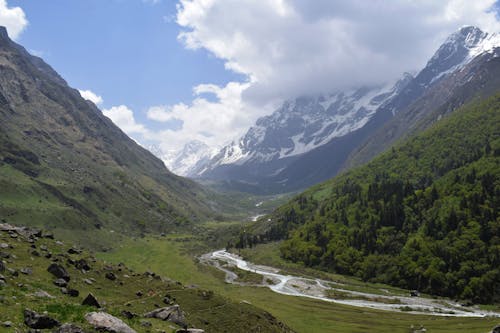
The entire route lies within Govind Pashu Vihar National Park — home to the Himalayan snow leopard, black bear, Himalayan tahr and the state bird of Uttarakhand, the Himalayan monal pheasant. The Snow Leopard Conservation Project was launched from this sanctuary, making it one of the most ecologically significant trekking regions in the Garhwal Himalayas. Along the way you trek beside the turquoise Supin River through dense rhododendron and oak forests, pass through ancient Garhwali villages like Osla (with its 1,000-year-old Someshwar Mahadev Temple), and camp at alpine meadows like Devsu Bugyal and Kalkatiyadhar.
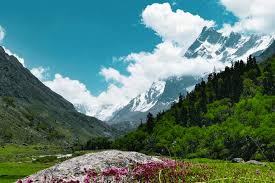
The Har Ki Dun valley offers unobstructed views of the Swargarohini Peak group (I, II, III) — the mythological ‘stairway to heaven’ where the Pandavas ascended — along with Black Peak / Kalanag (6,387 m) and Bandarpoonch (6,316 m). Optional side-treks include Maninda Tal (3,800 m) and Jaundhar Glacier viewpoint (3,875 m). Adventurous trekkers can extend by 2–3 days to include Ruinsara Tal (sacred alpine lake at the base of Black Peak).
7:00 AM
Many fables and tales of the era of Mahabharata are admired here. However, it is essential aware of the readers and trekkers about the real facts and myths.
Many trekking companies claim myths about the worship of Duryodhana in the temple of Yudhishthira. Local people believe that they reach heaven via the Har Ki Dun Trek. The truth is none of this exists here as per accurate facts and research. On the contrary, the chronicle of Yudhishthir reaching heaven through the Har ki Dun trail never exists here. Instead, the saga of reaching heaven was through the path of Badrinath towards Swargarohini peak at Narayan Parvat (mountain).
The locations elapsed are Laxmi van, Chakaratir, Sahastradhara, and Satopant Lake Furthermore, there is no existence of any Duryodhana temple in the Mori district of Uttarkashi. Instead, the temple, which is claimed as Duryodhana Temple, is the Someshwar Mahadev temple, a chapel of Lord Shiva.
Depart Dehradun early morning for the 190 km drive to Sankri (1,920 m / 6,309 ft) — the base village for the Har Ki Dun trek and hub for several other Uttarkashi treks including Kedarkantha and Bali Pass. The drive follows the Yamuna River valley through Mussoorie, Kempty Falls, Purola, Mori and Netwar before turning into the mountains. Arrive Sankri by evening; check into the Grand Shiva Homestay. Briefing on trek rules, equipment check, and distribution of Govind Wildlife Sanctuary permits. Dinner and overnight at Sankri.
Short drive from Sankri to Dharkot / Gangad (the current road-head; formerly trekkers started at Taluka). The trail enters Govind Wildlife Sanctuary immediately at the forest checkpost — entry permits verified here. The path follows the Supin River through dense oak and rhododendron forest with waterfalls visible across the valley. A gentle 5 km walk brings you to Cheludgad campsite (2,487 m / 8,158 ft). Camp by a small stream. In spring (March–April), rhododendrons bloom red and pink all along this section. Wildlife active in the early mornings — Himalayan monal and grey langur common sightings.
The longest and most culturally rich day of the trek. The trail continues alongside the Supin River, crossing wooden bridges and passing through dense deodar and oak forest. The first highlight is Osla village (2,590 m / 8,500 ft) — the last permanently inhabited Garhwali settlement before the Har Ki Dun valley, famous for its traditional wooden architecture with intricately carved deodar cedar facades, slate roofs, and the Someshwar Mahadev Temple (a 1,000-year-old Lord Shiva temple, often misidentified as a Duryodhana temple). After Osla, the trail gains altitude through Kalkatiyadhar meadow (3,028 m) and enters Bhojpatra (Himalayan birch) forest before reaching Bhosla camp (2,985 m / 9,795 ft). Overnight camping.
The summit day of the trek. From Bhosla, the trail climbs through Devsu Bugyal (3,058 m / 10,032 ft) — a sprawling alpine meadow with wildflowers in summer and golden grass in autumn — and then ascends to the Har Ki Dun valley floor at 3,645 m / 11,958 ft. The panorama from the valley is extraordinary: Swargarohini I (6,252 m), Swargarohini II and III, Black Peak / Kalanag (6,387 m / 20,955 ft), Bandarpoonch (6,316 m), Hata Peak (5,820 m) and the Ruinsara Range all visible in one arc. Optional side-trek to Maninda Tal (3,800 m / 12,500 ft) — a small glacial lake — or to the Jaundhar Glacier viewpoint (3,875 m). Packed lunch in the valley. Return to Bhosla or camp in the valley. The Pandavas’ path to Swargarohini (the mythological Gateway to Heaven) begins from this valley.
Begin the return journey. From Bhosla/Har Ki Dun descend through Devsu Bugyal and back via the Supin valley. Option: take the slightly longer Devsu Bugyal ridge trail instead of the direct forest path for one final panoramic view of the Swargarohini group before the valley is hidden by the trees. Pass through Osla village again — stop for tea and explore the Someshwar Mahadev Temple if missed on Day 3. Descend to Cheludgad campsite by evening. The descent of 13 km takes 6–7 hours with gradual downhill all the way.
Final trekking day: 6 km descent from Cheludgad back to the Dharkot road-head, retracing the trail through Govind Sanctuary forest. Exit the sanctuary at the checkpost; permits surrendered. Drive the short 21 km back to Sankri for the final night at Grand Shiva Homestay. Hot showers, a home-cooked Garhwali meal and time to relax. Evening free to explore Sankri village — the hub for the Kedarkantha, Bali Pass and Ruinsara Tal treks. Trek debrief and certificate presentation.
After breakfast, depart Sankri for the 190 km return drive to Dehradun — retracing the Yamuna valley route through Netwar, Mori, Purola and Mussoorie. Arrive Dehradun by evening. Trek officially concludes. Our team will assist with onward travel arrangements. Explore our full range of Uttarakhand trekking packages from our Rishikesh base for your next Himalayan adventure.
Har Ki Dun Valley is accessible year-round to those willing to adapt, but April–June and September–November deliver the ideal balance of safety, scenery, and trail conditions.
The valley receives over 2,000 mm of rain June–August. Trails become slippery, stream crossings dangerous. Experienced trekkers who embrace the monsoon find the valley lushly carpeted in wildflowers — but pack gaiters and waterproofs.
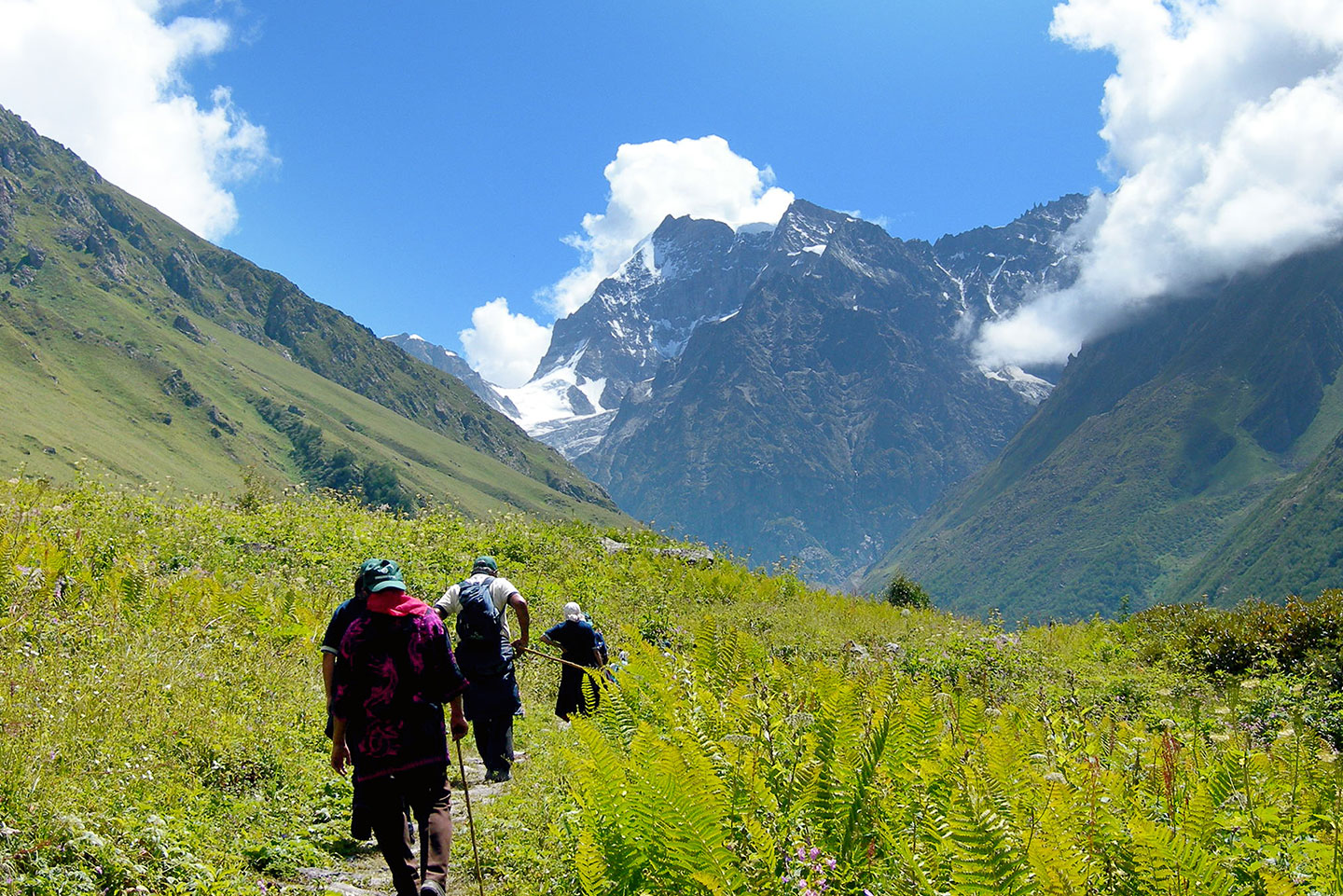
Har Ki Dun is graded Moderate — suitable for first-time trekkers with a basic fitness base. The trails are well-defined forest paths and open meadow walks; there are no technical sections, glaciers, or exposed ridgelines on the standard 7-day route.
Weeks 1–2: 30-minute walks daily; 2× per week bodyweight squats (3 sets of 15). Weeks 3–4: Upgrade to 45-minute brisk walks + 20-minute jog on alternate days. Weeks 5–6: Stair climbs with a loaded 8 kg daypack, 45 minutes; include one 10–12 km weekend hike on uneven terrain.
The entire Har Ki Dun trek route falls within the Govind Pashu Vihar National Park & Sanctuary, a protected reserve spanning 958 km² in Uttarkashi district. The sanctuary is home to snow leopard, Himalayan brown bear, musk deer, and over 150 bird species.
A mandatory Forest Entry Permit is required for all trekkers. Our team arranges this at Sankri checkpost. Foreign nationals require an additional inner-line permit processed from Dehradun — we handle all paperwork as part of your package.
Osla Village (altitude 2,560 m) is one of the most culturally intact settlements in the Tons Valley. Its population of ~200 families speaks an archaic Garhwali dialect, maintains a semi-nomadic livestock economy, and follows ancient Hindu customs largely unchanged since medieval times.
Osla homes are constructed in the same Kath-Khuni (wood-stone bonding) tradition as Himalayan temples — cedar beams interlocked without mortar, designed to flex under seismic stress. Trekkers passing through Osla on Day 4 have an opportunity to interact with local families; our guides arrange a tea stop with a homestay family when available.
Remove shoes before entering any temple or village home. Photography of women and religious ceremonies requires consent. Our guides will brief the group on local customs before entering the village. White World Expeditions maintains a community relationship with Osla families and contributes a small fee from each trek to the village development fund.
Ruinsara Tal is a sacred glacial lake sitting at 3,900 m above sea level, nestled in a high-altitude bowl directly below the Swargarohini massif. The lake is revered in Hindu mythology as the point where the Pandavas discarded their earthly weapons before ascending to heaven.
Adding the Ruinsara Tal extension converts your 7-day Har Ki Dun Trek into a comprehensive 9–11 day Himalayan expedition. This extension is available as an add-on to our standard package and can be booked at the time of registration.
The Har Ki Dun Valley is framed by one of Uttarakhand’s most dramatic high-altitude panoramas — the Swargarohini group of peaks, mythologically identified as the “Gateway to Heaven” (Swarga = heaven, rohini = ascent). This is the massif the Pandavas are said to have climbed on their final journey.
Black Peak (Kalanag) at 6,387 m dominates the eastern skyline from Osla and is a popular technical mountaineering objective for expedition teams. It was first summited in 1955 by a joint Indo-British team led by Col. J.O.M. Roberts.
Golden hour (5:30–7:00 am): Position yourself at the meadow edge, facing northeast, for the alpenglow on Swargarohini I and Bandarpunch. Sunset (5:30–7:00 pm): The Black Peak south face catches last light in a vivid orange — best from the boulder field 200 m above camp. Bring a 50–200mm zoom for summit detail; 24mm for the full valley panorama.
Sankri is the base village and last motorable point for the Har Ki Dun Trek. It sits at 1,920 m on a ridge above the Supin River in Uttarkashi district. Our treks depart from Dehradun — all transport to and from Sankri is managed by our team.
Dehradun → Vikasnagar (45 km, 1h) → Purola (120 km, 4h) → Mori (145 km, 5h) → Naitwar (168 km, 6.5h) → Sankri (200 km, 8–9h). Road condition: paved highway to Mori; narrow mountain road Mori–Sankri. Best driven in daylight. Our drivers are experienced on this route and carry emergency spares.
This Har Ki Dun Trek guide was written and verified by our lead mountain expert with first-hand experience on every section of the route.
All itinerary details, altitude figures, and cultural information on this page are drawn from first-hand experience on the Har Ki Dun route. Learn more about our team and the White World Expeditions story.
Everything you need to know before booking the Har Ki Dun Trek — answered by our team of experienced mountain guides.
Har Ki Dun is your gateway to Uttarakhand’s finest trekking experiences. Explore more Himalayan adventures from our portfolio: