Rishikesh Camping Guide 2026-27: Camp Types, Shivpuri vs Forest Camps & What to Expect
Rishikesh Camping Guide 2026-27: Camp Types, Shivpuri vs Forest CampsRishikesh Camping Guide 2026-27: Camp Types, Shivpuri vs Forest Camps
By Bheem Singh Chauhan, Founder & Lead Guide|Published 2 October 2026|12 min read
Rishikesh is India’s most popular place for a night under canvas: Ganga beaches, sal forests, Garhwal villages and Himalayan foothills, all within an hour of town. But camping in Rishikesh can mean anything from a tent on a riverside beach to an AC cottage with a pool. We have run our own forest campsite here for years, so this guide explains the different kinds of camps, where they are, what the rules say, and what a night at camp is really like, so you can pick the right one before you book.
5 Types of Camps in Rishikesh
Every camp in Rishikesh is built around the same evening: tents, a bonfire, a buffet dinner and a quiet night outside the city. What changes is the setting and how much comfort you get. These are the five kinds you’ll see when you compare camps in Rishikesh.
1. Riverside (Beach) Camps
Swiss tents or dome tents on approved sites near the Ganga, mostly around Shivpuri, Marine Drive and Kaudiyala. Some have a sandy beach for volleyball and river views; all must stay 100 m+ back from the water.
Best for: rafters, friend groups, a classic “Ganga camp” photo.
2. Forest & Jungle Camps
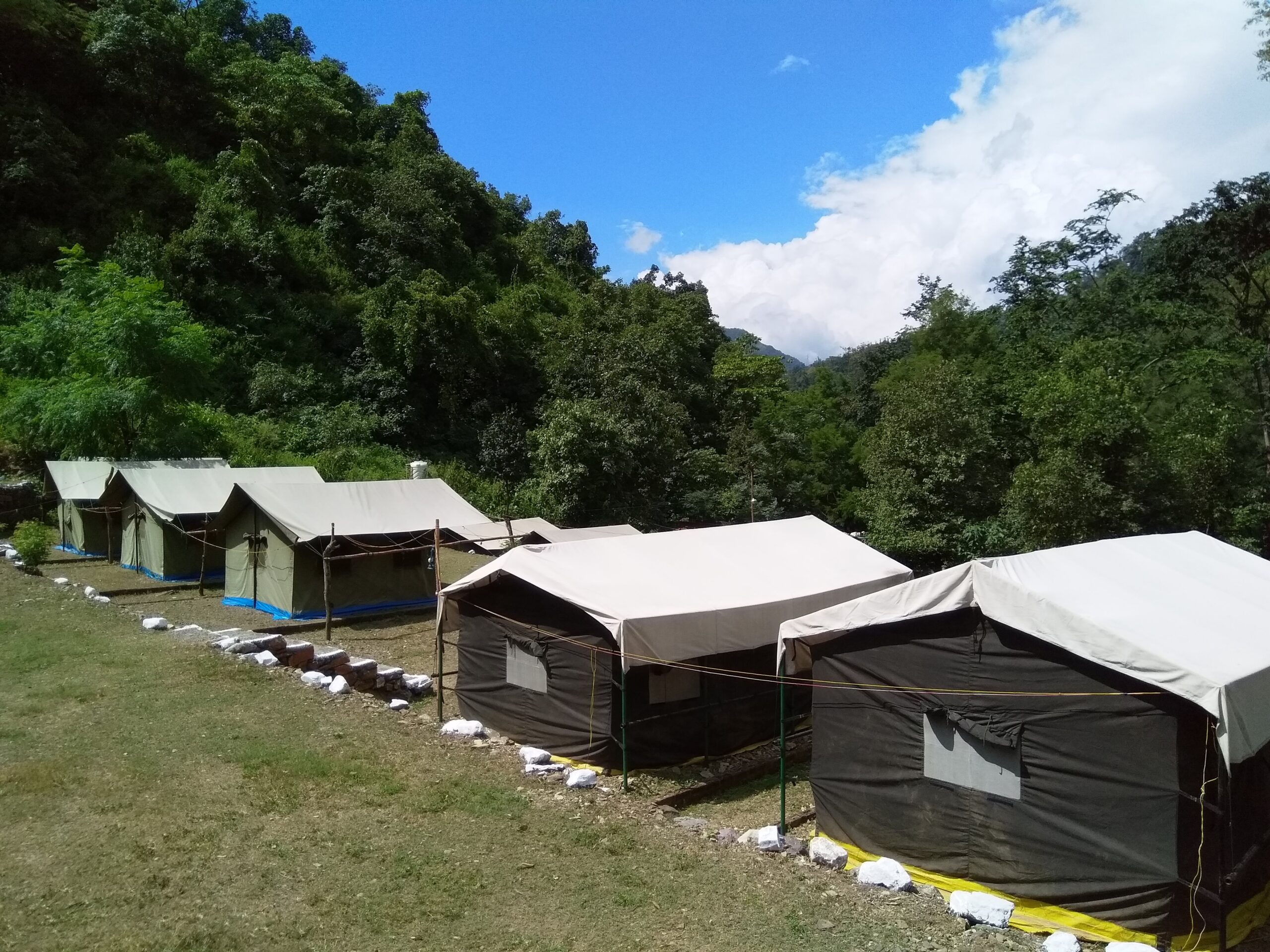
Tents in a side valley among sal and mixed forest, often a short walk from the road. Expect birdsong, a stream or waterfall trek, darker skies and fewer neighbours. Our forest camp at Goolar is this type.
Best for: quiet nights, nature lovers, stargazing, birding.
3. Village & Hill Camps
Camps on terraces above the river near Garhwali villages, with mountain views and village walks. Roads are narrower and nights are cooler than by the river.
Best for: slow weekends, culture, sunrise views.
4. Cottage & Glamping Stays
Rooms, cottages or glamping domes with proper beds, often attached bathrooms, AC options and sometimes a swimming pool, such as our deluxe AC stay at Wondrous Camp near Shivpuri.
Best for: families with young kids, couples, first-timers who want comfort.
5. Rafting + Camping Combos
Any of the above, packaged with a morning of Ganga rafting (9–35 km). You stay one night and raft on day 1 or day 2, with transfers to the rafting start point arranged.
Best for: first-time rafters, college and office groups, weekend trips from Delhi.
Swiss Tent vs Alpine Tent vs Dome
Swiss tents are large, framed canvas tents with beds. Alpine deluxe tents (what we use at Goolar) are sturdy, weather-proof tents with mattresses and bedding. Dome tents are smaller, budget, floor-level tents.
Tip: ask for a photo of the inside of your tent before you pay.
Shivpuri vs Forest Camps vs Kaudiyala: Which Area Should You Choose?
Where your camp is matters more than its name. Shivpuri is the busy camping hub, forest valleys are the quiet option, and Kaudiyala is the remote, upstream choice. Here is how they compare.
Area
Distance from Rishikesh
Setting & vibe
Getting there
Best for
Shivpuri
About 16 km (30–40 min)
Busy camping and rafting hub on the Badrinath road; many camps, cafés and adventure sports
Easy by car or taxi; most camps near the road
Rafting groups, first-timers, short trips
Forest valleys (e.g. Goolar, Pawki Devi Road)
About 21 km
Quiet forest valley below Thaat village; waterfall trail, birdlife, dark skies
Road, then a 15-minute (700 m) walk to camp
Nature lovers, couples, families with older kids
Kathya Badal (near Shivpuri)
About 16 km
Village setting with forest and mountain views; deluxe stays and a pool at Wondrous Camp
By road with parking at camp
Families, couples wanting comfort
Marine Drive
About 26 km
Wide river valley, calmer than Shivpuri; start of the 26 km rafting stretch
By road, 45–60 min
Families, groups combining camp and longer rafting
Kaudiyala
About 35–40 km
Remote upstream stretch, fewer camps, start of the 35 km rafting run
By road, 1–1.5 hrs on the Badrinath highway
Experienced rafters, longer stays
Our take: if your trip is mainly about rafting, stay near the stretch you’ll raft (Shivpuri for 16 km, Marine Drive for 26 km, Kaudiyala for 35 km). If it’s mainly about the night under the stars, a forest camp gives you a quieter, more natural experience for the same price.
Is Beach Camping on the Ganga Allowed? The NGT Rules Explained
Yes, but only at approved sites. In March 2017 the National Green Tribunal (NGT) lifted its conditional ban on camping along the Ganga between Rishikesh and Kaudiyala, but allowed it only at 25 identified sites set back more than 100 metres from the river. Eight of the 33 sites surveyed were too close to the water and were ruled out. The case was brought over waste, plastic and glass bottles on the riverbanks.
What this means for you:
A “tent on the sand right by the water” is a red flag. Legitimate riverside camps are set back from the river.
Ask if the camp is registered with Uttarakhand Tourism and on an approved site. A good operator will tell you straight away.
Unauthorised beach camps have been removed in past crackdowns along the Shivpuri stretch, so an unapproved camp can be shut with little notice, even after you have paid.
Forest and village camps away from the riverbank, like ours at Goolar and Wondrous Camp, don’t depend on beach-camp approvals or river levels.
Rules and enforcement change. If you are booking a riverside camp anywhere, check its registration and ask what happens to your booking if the district administration closes beach camps for weather or high water.
What a Night at a Rishikesh Camp Looks Like
This is the real 1 night / 2 day plan at our forest camp at Goolar. Most organised camps follow a similar rhythm.
12:00 noon (5 PM for the 1-night stay)Check in after a 15-minute forest walk from the road. Welcome drink and a briefing from the camp manager.
1:00 – 2:30 PMVegetarian buffet lunch in the dining area.
AfternoonRest, play volleyball, cricket or badminton, or walk the short trail to the Hidden Waterfall.
EveningTea and snacks, then the bonfire with DJ music. Music stops at 10 PM and the valley goes quiet for the wildlife.
9:00 – 10:30 PMBuffet dinner (veg and non-veg), then a night in your tent under a sky full of stars.
7:00 AMMorning tea, birdsong and the best light of the day.
8:00 – 9:30 AMBreakfast: parantha, toast, omelette and curd. On longer stays, a village walk to Thaat and Valyakhaan.
11:00 AMCheck out, or head for a rafting session.
Facilities to Check Before You Book a Camp
Most complaints about camping in Rishikesh come from expectations, not the camp. Ask these questions before you pay; a good operator answers them in one message.
Tent type and bedding: Swiss, Alpine or dome? Beds or mattresses? Quilts in winter?
Washrooms: attached to the tent or shared? Hot water? Western or Indian toilets?
Electricity and charging: is there power in the tents, and is there a backup?
Mobile network: which networks work? Many valleys have only patchy Jio or Airtel and no WiFi.
Food: how many meals are included, veg or non-veg, and are extra meals charged?
Music and quiet hours: until what time does the DJ or bonfire music play?
Access: can a car reach the camp, or is there a walk with luggage?
Policies: alcohol, pets, minimum age for children, ID at check-in, and cancellation terms.
Our answers for the Goolar forest camp: 25 Alpine deluxe tents (double or triple sharing); clean shared washrooms, not attached; charging points with power backup; Jio and Airtel with patchy signal; buffet meals with one non-veg dish at dinner; DJ until 10 PM, then quiet hours; a 700 m walk from the road; pets welcome; guests may bring their own drinks; photo ID needed at check-in.
How Much Does Camping in Rishikesh Cost?
Prices depend on the type of camp, the season and whether meals, transport or rafting are included. As a rule of thumb for 2026-27, per person per night:
Camp type
Typical price per person
What’s usually included
Budget tents / dome tents
₹1,200 – ₹1,600
Dinner, breakfast, bonfire
Forest camp (Alpine or Swiss tents)
₹1,550 – ₹2,500
Snacks, dinner, breakfast, bonfire, a trek; lunch on 1N/2D stays
Deluxe and AC stays / cottages
₹2,000 – ₹3,000
3 meals, bonfire, sometimes a pool and transport
Glamping domes and luxury camps
₹4,000 – ₹8,000+
Attached bathrooms, premium meals, decor
Rafting + camping combo
₹2,150 – ₹4,550
1 night with meals plus 9–35 km of rafting
Our own stays start at ₹1,550 per person for the 1-night forest camp (triple sharing). For every package, date and inclusion, see our Rishikesh camping packages and prices.
Hidden costs to ask about: transport to the camp (we charge ₹1,500 one way from Rishikesh when it isn’t included), extra meals, an extra bed, and weekend or long-weekend surcharges.
Rafting + Camping: How the Combos Work
The most popular way to camp in Rishikesh is to pair it with a morning on the Ganga. You stay one night and raft either on arrival day or the next morning, depending on the batch timings.
9 km (Brahmpuri): gentle, ideal for families and nervous first-timers. Camp + 9 km rafting.
16 km (Shivpuri): the classic first rafting trip, with Roller Coaster and Golf Course rapids. Camp + 16 km rafting.
26 km (Marine Drive): more rapids and more time on the river. Camp + 26 km rafting.
35 km (Kaudiyala): the longest day run, for fit and confident groups. Camp + 35 km rafting.
Camp + rafting + bungee: add the 117 m Himalayan bungee jump. See the combo.
Camping for Families, Couples, Groups & Solo Travellers
Families with children
Pick a camp with car access and simple walks. At our forest camp the minimum age is 10; at Wondrous Camp it is 6. Children under 6 sharing a parent’s bed stay free and 6–12-year-olds pay 50%. Rafting is for ages 14 and above.
Couples
Ask for a double-sharing tent, a camp with quiet hours, and a weekday stay if you can; weekends are when big groups arrive.
College, office and school groups
Camps can host 50–60 people for a night and up to 30 on rafting combos. We offer group and corporate discounts, and run a school adventure trip with rafting, caving and rock climbing.
Solo travellers
Book a triple-sharing tent or join a group date. Camps are staffed through the night, and the bonfire is the easiest place in Rishikesh to meet other travellers.
Travelling with a pet
Many camps don’t allow pets, so always ask. Pets are welcome at our camps; tell us when you book.
What to Pack for Camping in Rishikesh
Comfortable walking shoes for forest trails and a pair of sandals
Torch or headlamp with spare batteries
Warm jacket, cap and thermal layer from November to February
Mosquito repellent and sunscreen
Refillable water bottle (camps are plastic-light)
Power bank, because charging points are shared
Personal medicines and a small first-aid kit
Government photo ID for check-in
Quick-dry clothes and a change of clothes if you’re rafting
Stay out of the river at camp. The Ganga is cold and fast even when it looks calm; swim only during rafting, with a life jacket and a guide.
Drinking: drinking on public ghats and riverbanks isn’t allowed. At private camps, follow the camp’s policy. At our Goolar camp you may bring your own drinks; please drink responsibly and keep glass away from the bonfire.
Noise: respect quiet hours. Camps in forest areas stop music by 10 PM for the wildlife and other guests.
Leave no trace: carry back plastic, don’t litter the forest or beach, and never burn waste in the bonfire.
Wildlife: keep food inside the dining area, don’t wander alone in the forest at night, and use a torch on trails.
Weather: if heavy rain or a weather alert is forecast, check with your camp before you set off.
Planning Your Rishikesh Camping Trip?
Tell us your dates, group size and whether you want rafting, and we’ll suggest the right camp.
Rishikesh has five main types of camps: riverside (beach) camps on approved sites near the Ganga, forest or jungle camps in side valleys, village and hill camps above the river, cottage and glamping stays with rooms and pools, and rafting + camping combo camps. Most are on the Rishikesh–Kaudiyala stretch of the Badrinath and Neelkanth roads, 15 to 40 km from town.
Which is better for camping: Shivpuri or a forest camp?
Choose Shivpuri if you want to be close to the rafting start point, cafés and adventure sports, and don’t mind other camps nearby. Choose a forest camp if you want quiet nights, a bonfire under clear skies, a waterfall trek and fewer people. Forest camps are usually a short walk from the road and have fewer luxuries, while Shivpuri stays are easier to reach by car.
Is beach camping on the Ganga still allowed in Rishikesh?
Only at approved sites. Under a National Green Tribunal order of March 2017, camping on the Rishikesh–Kaudiyala stretch is allowed only at 25 identified sites set back more than 100 metres from the river. Unauthorised beach camps have been removed in later crackdowns, so ask any riverside camp to confirm it is an approved, registered site before you book.
How far are the camps from Rishikesh town?
Most camps are 15 to 40 km from Rishikesh. Shivpuri camps are about 16 km away (30–40 minutes by road), forest camps such as Goolar on Pawki Devi Road are about 21 km away, Marine Drive is about 26 km, and Kaudiyala camps are 35–40 km upstream on the Badrinath road.
Do Rishikesh camps have attached washrooms?
It depends on the camp. Luxury Swiss tents, cottages and glamping stays usually have attached bathrooms, while budget and forest camps usually have clean shared washroom blocks. At our Goolar forest camp the washrooms are shared, not attached to the tents. Always ask before you book if an attached bathroom matters to you.
Is there mobile network and electricity at Rishikesh camps?
Most camps have electricity for lights and charging points, often with power backup, but signal varies. In the forest and river valleys Jio and Airtel usually work only in patches, and WiFi is rare. Download maps, tickets and music before you leave Rishikesh.
Can I go camping in Rishikesh during the monsoon?
Generally no. Rafting in Rishikesh is closed from July to mid-September, and most riverside camps close or run with restrictions because of rising water, landslides and heavy rain. Our camps are fully closed from July to mid-September and reopen with the new season in late September.
Is camping in Rishikesh good for first-timers and solo travellers?
Yes. Organised camps in Rishikesh provide the tent, bedding, meals, bonfire and a camp manager, so you don’t need any camping experience or gear. Solo travellers can book triple-sharing tents or join group departures, and first-timers usually enjoy a 1 night / 2 day stay with a short trek and the bonfire evening.
How cold does it get at Rishikesh camps in winter?
From December to February, days are sunny and around 18–22°C, but nights at the camps can drop to about 5°C, and forest valleys feel colder than town. Camps provide blankets or quilts and a bonfire, but bring a warm jacket, cap, gloves and thermal layers.
What are the check-in and check-out times at Rishikesh camps?
Most camps check in from 12 noon to 2 PM and check out by 10–11 AM the next day. At White World Expeditions, check-in is from 12 noon (5 PM for the 1-night forest camp stay) and check-out is by 11 AM, so plan rafting on the morning of day 2 or before you arrive.
How many nights are enough for camping in Rishikesh?
One night is enough for a bonfire evening and a short trek, and it fits a weekend trip from Delhi. Two nights let you add rafting, a village walk and a slower morning without rushing back. Groups combining camping with rafting, a trek to Kunjapuri or Neelkanth, and adventure sports usually prefer 2 nights / 3 days.
Can I go camping in Rishikesh without rafting?
Yes. Camp-only stays include meals, the bonfire and camp activities such as volleyball, nature walks and a waterfall trek. Rafting is an optional add-on, which you can book with the stay as a combo or separately for any morning of your trip.
Sources & How We Keep This Guide Accurate
Camp details, timings, prices and policies come from our own campsites and were confirmed by our operations team in October 2026. The beach-camping rules are based on the National Green Tribunal order reported by Down To Earth. Market price ranges are based on 2026 camp listings across Rishikesh. We review this guide before every season; last reviewed 2 October 2026.
Bheem has spent 22+ years guiding rafting, camping and expedition trips in the Garhwal Himalaya and on 17+ rivers worldwide. He is IRF certified and Rescue 3 trained, and runs White World Expeditions’ own forest camp at Goolar, 21 km from Rishikesh. White World Expeditions is rated 4.8★ from 900+ Google reviews and is licensed for the 2026-27 season. Read Bheem’s full profile.
Swap the City for a Night Under the Stars
Forest camps, riverside stays and rafting combos from ₹1,550 per person, open from late September to June.