Home ›
Trekking in Uttarakhand ›
Neelkanth Mahadev Temple Trek Rishikesh
There is a reason pilgrims have walked this trail for thousands of years. The path from Rishikesh to Neelkanth Mahadev Temple climbs 1,330 metres into the Shivalik foothills, cuts through the dense sal forests of Rajaji National Park, and ends at one of the most sacred Shiva shrines in all of North India. According to Hindu mythology, this is the precise spot where Lord Shiva drank the Halahala — the deadly poison that emerged from the churning of the cosmic ocean — and held it in his throat to save the universe. His throat turned blue. He became Neelkanth. The Blue-Throated One.
The Neelkanth Mahadev Temple trek from Rishikesh covers 12–14 km one way, takes 4–5 hours to ascend, passes a sacred cave, a hidden waterfall, and wildlife that includes wild elephants and leopards. It is rated easy to moderate and is one of the few treks in India where devotion and adventure are genuinely inseparable. This complete guide covers every route option, distance, timing, wildlife, mythology, and practical detail you need before you start walking.
Neelkanth Mahadev Temple Trek: At a Glance
| Temple Altitude |
1,330 m (4,363 ft) |
| Trek Distance |
12–14 km one way (Ram Jhula route) | 9 km (Garudachatti route) |
| Trek Duration |
4–5 hours ascent | 3 hours descent |
| Difficulty |
Easy to Moderate |
| Starting Point |
Ram Jhula / Swargashram / Garudachatti, Rishikesh |
| Distance by Road |
32 km from Rishikesh | 1.5–2 hours drive |
| Temple Timings |
5:00 AM – 6:00 PM (daily, year-round) |
| Morning Aarti |
6:00 AM |
| Evening Aarti |
7:00 PM |
| Entry Fee |
Free (no entry charge for temple or trail) |
| Wildlife |
Elephants, barking deer, leopards (rare), peacocks, Himalayan birds |
| Best Season |
February–April, September–November |
| Avoid |
Shravan month (July–Aug) unless joining Kanwar Yatra |
In This Guide
Why Neelkanth? The Samudra Manthan Story
Understanding why this temple exists makes the trek mean something entirely different. The story comes from the Puranas — the ancient Hindu scriptures.
During the Samudra Manthan — the great churning of the cosmic ocean by gods and demons in search of Amrit (the nectar of immortality) — a terrible poison called Halahala was the first thing to emerge. The poison was so lethal it threatened to destroy all of creation. Gods and demons fled in terror. No one could contain it.
Lord Shiva stepped forward. He held the Halahala in his throat — neither swallowing it nor spitting it out — to save the universe. The poison turned his throat dark blue. Goddess Parvati, watching in horror, held his throat to prevent the poison from descending further. From that moment, Shiva became known as Neelkanth — “the Blue-Throated One.”
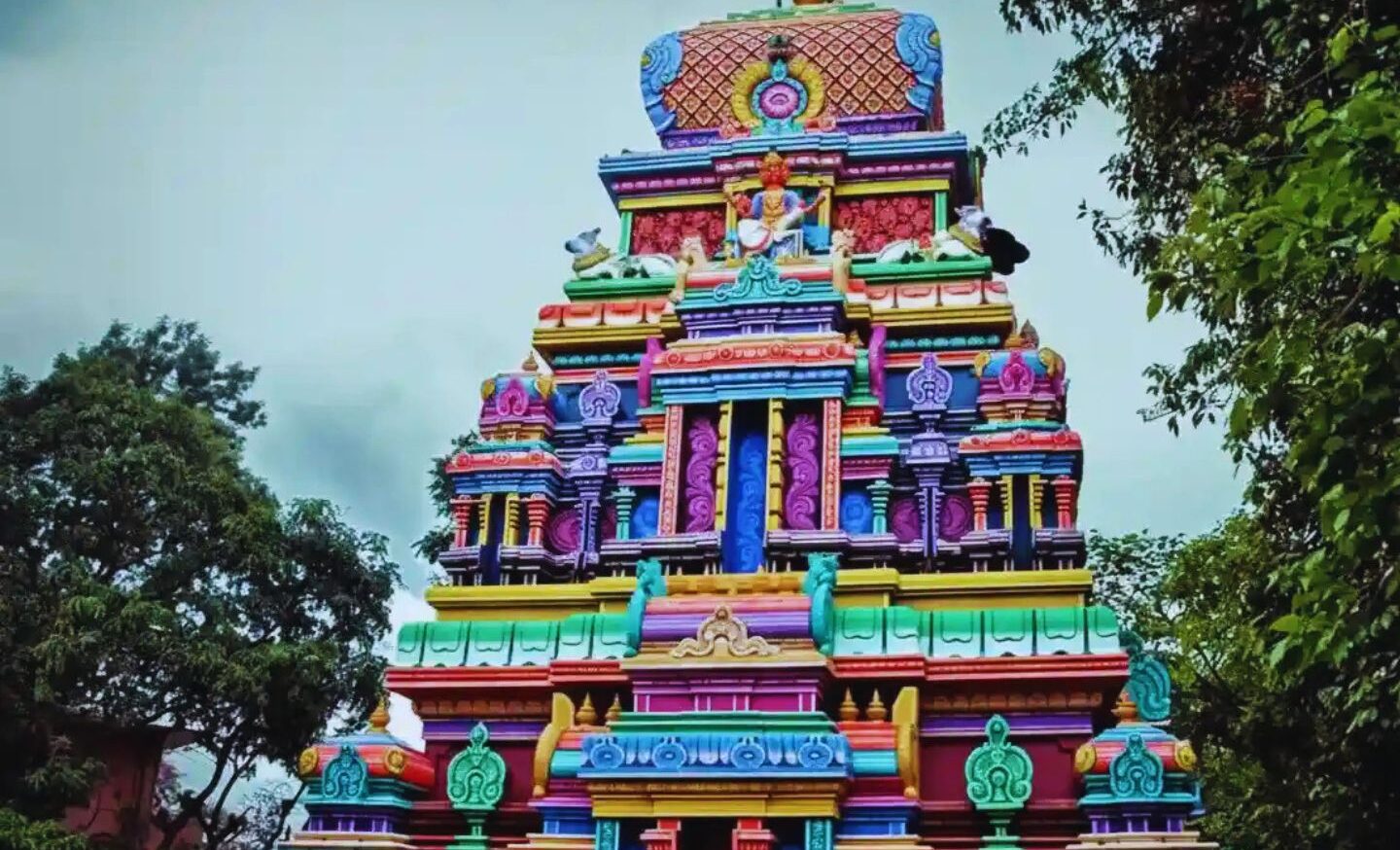
The exact spot where this act of cosmic sacrifice took place is this temple. Nestled between the sacred valleys of Manikoot, Brahmakoot, and Vishnukoot, Neelkanth Mahadev Temple is not merely a place of worship — it is a site of remembrance for the moment a god chose to suffer so the world could continue. When you trek here, you walk in the footsteps of the ancient sages and pilgrims who have made this journey for millennia.
How Long Is the Neelkanth Mahadev Temple Trek?
This is the most searched question about this trek, and the answer depends on which route you take and where you start.
| Route |
Starting Point |
Distance (One Way) |
Ascent Time |
Descent Time |
Difficulty |
| Ram Jhula Forest Route |
Ram Jhula / Swargashram |
12–14 km |
4–5 hours |
3 hours |
Easy–Moderate |
| Garudachatti Route |
Garudachatti Village |
9 km |
4–4.5 hours |
2.5–3 hours |
Moderate–Hard |
| By Road (Drive) |
Rishikesh City |
32 km |
1.5–2 hours |
1.5 hours |
No trekking |
Quick Answer for Google: The Neelkanth Mahadev Temple trek is 12–14 km one way from Ram Jhula and takes 4–5 hours to climb. Total round trip with darshan is 7–8 hours. Start by 6:00 AM to return comfortably before dark.
Three Trek Route Options Compared
Route 1 — Ram Jhula Forest Route (Most Popular)
Route: Ram Jhula Bridge → Swargashram → Forest Trails → Patna Waterfall → Mauni Baba Cave → Neelkanth Mahadev Temple
12–14 km one way
4–5 hours up
Easy to Moderate
Best for: Beginners, Pilgrims, Families
This is the classic route — the same one saints, sages, and barefoot pilgrims have walked for centuries. It starts at Ram Jhula, the iron suspension bridge over the Ganga in Rishikesh, and heads north through the spiritual neighbourhood of Swargashram, passing ashrams, small temples, and the sounds of chanting before the trail enters the forest.
Once inside the sal tree forest, the city falls away completely. The trail is well-worn and relatively easy to follow, climbing gradually through the Rajaji National Park buffer zone. You will cross small streams, pass under a canopy that blocks direct sun for most of the route, and encounter 2–3 small dhabas where you can get chai, water, and basic food. About halfway up, the trail passes Patna Waterfall — a beautiful cascade that is most powerful between July and October. Further up is the Mauni Baba Cave, where the sage Mauni Baba meditated in silence for decades. Even today, people stop here for a few minutes of quiet.
The final kilometer steepens before you arrive at the temple complex. The elevation gain is approximately 984 metres from Rishikesh. Despite the distance, the consistent tree cover, gradual gradient, and numerous rest points make this the most manageable route for first-timers.
Route 2 — Garudachatti Route (Shorter, Steeper)
Route: Garudachatti Village → Rajaji National Park Trail → Neelkanth Mahadev Temple
9 km one way
4–4.5 hours up
Moderate to Hard
Best for: Experienced Trekkers, Wildlife Enthusiasts
The Garudachatti route is shorter in distance but significantly steeper — the elevation gain of 984 metres (3,231 ft) is compressed into 9 km rather than 14 km, making each kilometre noticeably harder. The trail enters deeper into Rajaji National Park territory, which means better wildlife spotting chances and more genuine wilderness feel. This route sees fewer pilgrims and more trekkers.
Garudachatti village is well-connected by road from Rishikesh. If you are a seasoned trekker looking for a physical challenge with a wildlife component rather than a crowded pilgrim route, this is the option to choose.
Important: Rajaji National Park has elephant corridors along both routes. Never trek alone. Avoid dawn or dusk on the trail when elephants move most actively. If you encounter an elephant, move quietly off the trail and wait. Do not run.
Route 3 — Drive Up, Trek Down (Best of Both)
Route: Drive from Rishikesh to Neelkanth Temple (32 km) → Darshan → Trek downhill via Ram Jhula Forest Route back to Rishikesh
12–14 km downhill only
3 hours descent
Easy
Best for: Families with seniors, Mixed groups
This is the most practical option for groups with mixed fitness levels — drive up for darshan, take time at the temple without rush, then descend via the forest trail at a relaxed pace. The downhill route through the sal forest is beautiful and much easier on the legs than climbing. You reach Neer Garh area and arrive at Rishikesh by road or walk to Ram Jhula.
The scenic drive itself is worthwhile — it winds through the Rajaji National Park buffer zone with valley views and occasional wildlife sightings. Taxis from Rishikesh charge approximately ₹2,200–₹2,800 for a round trip with waiting time.
Hour-by-Hour Trek Itinerary (Ram Jhula Route)
| Time |
Location |
What Happens |
| 5:30 – 6:00 AM |
Rishikesh / Ram Jhula |
Breakfast at a dhaba, fill water bottles, cross Ram Jhula bridge |
| 6:00 – 6:30 AM |
Swargashram |
Walk through the ashram neighbourhood — morning chanting, incense, puja sounds |
| 6:30 – 7:30 AM |
Forest entry |
Trail enters sal forest; cool, shaded; best wildlife spotting window; 2–3 km covered |
| 7:30 – 8:30 AM |
Mid-trail dhabas |
Rest stop; chai and biscuits available; 5–6 km covered; gradient increases slightly |
| 8:30 – 9:00 AM |
Patna Waterfall |
Stop at the waterfall; refill water; photograph; rest 15–20 minutes |
| 9:00 – 9:30 AM |
Mauni Baba Cave |
Sacred cave of silent sage; sit for a few minutes; gentle incline continues |
| 9:30 – 10:30 AM |
Final ascent |
Steepest section of the trail; pace slows; temple complex visible ahead |
| 10:30 – 11:30 AM |
Neelkanth Mahadev Temple |
Darshan, Shivalinga abhishek with Ganga jal and milk, sacred peepal tree, rest |
| 11:30 AM – 12:00 PM |
Temple premises |
Lunch at temple dhaba; rest; visit Mata Balkunwari Mandir nearby for valley views |
| 12:00 – 3:00 PM |
Descent via forest |
Trek down (3 hours); OR take shared jeep back to Rishikesh from temple parking |
| 3:00 – 3:30 PM |
Ram Jhula / Rishikesh |
Back in Rishikesh; evening Ganga aarti at Parmarth Niketan at 6:00 PM optional |
Trail Highlights: Waterfall, Cave, Wildlife & Villages
Patna Waterfall
Located roughly halfway up the Ram Jhula route, Patna Waterfall is a natural resting point that most trekkers use for a 15–20 minute break. The cascade drops into a rocky pool surrounded by dense forest — peaceful, cool, and completely removed from the noise of Rishikesh below. Water flow is strongest between July and October. Year-round there is enough flow to refill bottles (treat the water before drinking). Do not skip this stop on the ascent.
Mauni Baba Cave (Mauni Baba Gufa)
A short distance above Patna Waterfall, the trail passes the cave where the sage Mauni Baba spent decades in silent meditation — maun meaning “vow of silence” in Sanskrit. The cave is small and naturally formed in the hillside, with a small idol inside. Trekkers regularly stop here for rest and quiet reflection. The silence of the spot is striking — even on busy days, people seem to unconsciously lower their voices as they pass. It is one of those unassuming places on the trail that leaves a lasting impression.
Sacred Peepal Tree at the Temple
Inside the Neelkanth Mahadev Temple complex stands an ancient peepal tree (Ficus religiosa) that pilgrims believe holds special divine energy. The tradition is to tie a red or yellow thread around the trunk while making a sincere prayer — it is said the prayer will be answered and the soul purified. The tree is old, gnarled, and draped in coloured threads from decades of devotees. It stands beside the main temple entrance and is part of the ritual for most visitors.
Mata Balkunwari Mandir
A short walk from the main Neelkanth Mahadev Temple, the Mata Balkunwari Mandir is a quieter temple dedicated to the goddess. The viewpoint here offers sunrise and sunset views across the valley that many visitors consider even more beautiful than the main temple complex. If you arrive at the temple early enough, walk to Mata Balkunwari for the panorama before the crowds build. It is the kind of place most guidebooks do not mention — which makes it genuinely peaceful.
Wildlife in Rajaji National Park
The Neelkanth Mahadev Temple trek passes through the buffer zone of Rajaji National Park, one of the most important wildlife corridors in the Shivalik range. The park marks the northern limit of the Asiatic elephant’s range and is home to a remarkable variety of species that most day trekkers near Rishikesh never encounter.
| Wildlife |
Spotting Chance |
Best Time on Trail |
| Asiatic Elephant |
Moderate (especially monsoon) |
Early morning (6–8 AM) near forest entry |
| Barking Deer (Muntjac) |
High |
Dawn and dusk near forest streams |
| Ghoral |
Moderate |
Rocky sections of the upper trail |
| Leopard |
Rare — sign present |
Not typically seen; avoid solo trekking |
| Peacock |
Very High |
Lower forest section, any time |
| Junglefowl |
High |
Forest undergrowth throughout |
| Himalayan Birds |
Very High |
Early morning — Forest Owlet, Woodpecker, Bulbul, Magpie |
Wildlife Safety Rule: The forest has active elephant corridors. Always trek with a group of at least 3–4 people, make noise on the trail so animals hear you coming, and never approach any wildlife. If you see fresh elephant dung or hear movement in the undergrowth, pause and assess before proceeding. A local guide knows the active corridors and seasonal movement patterns.
Inside Neelkanth Mahadev Temple
The Main Sanctum Sanctorum
The heart of the temple is the Shivalinga inside the main sanctum — a naturally formed lingam draped in flowers, bel patra (wood apple leaves), and offerings from thousands of daily visitors. The walls of the sanctum are carved with scenes from the Samudra Manthan, depicting the gods, the churning serpent Vasuki, and the moment Shiva consumed the Halahala. The energy inside is concentrated and palpable — even non-religious visitors often describe feeling a distinct shift in atmosphere.
Rituals and Offerings
The primary offering at Neelkanth is Ganga jal abhishek — pouring sacred water from the Ganga over the Shivalinga. Many pilgrims carry their Ganga jal in copper vessels from Rishikesh specifically for this purpose. Other traditional offerings include fresh milk, honey, Bel Patra (considered the most sacred leaf for Shiva), white flowers, and sandalwood paste. The temple priests conduct the aarti at 6:00 AM and 7:00 PM; these are the most spiritually charged moments of the day.
Temple Etiquette
Remove footwear before the temple entrance — there is a free shoe storage stall nearby. Dress modestly; shoulders and knees should be covered. Photography is restricted inside the main sanctum — respect this rule. During Shravan month and Shivratri, follow the queue system. Avoid carrying leather items inside the temple complex. Mobile phones should be kept silent or switched off inside.
Best Time to Visit: Season by Season
| Season |
Months |
Trail Conditions |
Temple Crowds |
Verdict |
| Spring |
Feb – Apr |
Pleasant 18–28°C, clear forest paths, wildflowers |
Moderate |
Best |
| Summer |
May – Jun |
Hot (30–38°C at base), shaded trail helps — start by 5:30 AM |
High (school holidays) |
Good (early start essential) |
| Monsoon |
Jul – Aug |
Lush but slippery; Patna Waterfall spectacular; leeches below 1,000m |
Extremely High (Kanwar Yatra) |
Avoid unless joining Shravan pilgrimage |
| Autumn |
Sep – Nov |
Post-monsoon green, clear skies, 20–28°C, excellent visibility |
Moderate |
Best |
| Winter |
Dec – Jan |
Cool (10–18°C), dry, peaceful trail, forest crisp and clear |
Low |
Very Good (carry warm layers) |
Shravan Month Warning (July–August): During the sacred month of Shravan, hundreds of thousands of Kanwariyas walk barefoot to Neelkanth carrying Ganga jal. The queue for darshan can stretch 10–12 hours. Roads are completely blocked for days. Unless you are specifically joining this pilgrimage, plan your visit before June or after September.
Maha Shivratri: Extraordinary spiritual energy, but equally extraordinary crowds. Plan to arrive the night before and expect a 6–8 hour wait for darshan.
How to Reach the Trailhead from Rishikesh
| From |
Distance |
Time |
Mode |
Cost |
| Ram Jhula, Rishikesh |
Trek starts here |
Walk to bridge (10 min from most hotels) |
Walk |
Free |
| Rishikesh to Neelkanth (by road) |
32 km |
1.5–2 hours |
Private taxi |
₹2,200–₹2,800 (return) |
| Rishikesh to Neelkanth (by road) |
32 km |
1.5–2 hours |
Shared jeep |
₹80–₹120 per person |
| Haridwar to Rishikesh |
25 km |
45 min |
Bus / taxi |
₹50–₹300 |
| Dehradun to Rishikesh |
50 km |
1.5 hours |
Bus / taxi |
₹100–₹500 |
| Jolly Grant Airport to Rishikesh |
18 km |
30–40 min |
Taxi |
₹400–₹600 |
From Rishikesh to Ram Jhula: Most Rishikesh hotels are within 1–2 km of Ram Jhula. Walk or take an auto-rickshaw (₹50–₹80). Cross the bridge, enter Swargashram, and the forest trail begins clearly marked on the north side of the road.
Shared Jeeps to Neelkanth Temple: Available from Ram Jhula and Laxman Jhula stands. Useful if you want to drive up and trek down, or for the return journey after darshan.
What to Carry
| Item |
Why It Matters |
| Water — 2 litres minimum |
Limited refill points on trail; dhabas sell water but carry your own |
| Trekking shoes with grip |
Trail has rocky and rooted sections; monsoon makes it slippery |
| Light snacks / energy bars |
2–3 dhabas on route but limited variety; carry backup |
| Ganga jal + Bel Patra |
For Shivalinga abhishek — buy at Ram Jhula market before starting |
| Modest temple clothing |
Covered shoulders and knees required inside the temple |
| Cash only |
No digital payments on trail or at many temple stalls |
| Sunscreen + cap |
Open sections before forest entry and near the temple are exposed |
| Rain jacket (Jun–Sep) |
Afternoon showers arrive without warning in monsoon months |
| Headlamp / phone torch |
For very early morning starts (5–6 AM) on the lower trail |
| Basic first aid kit |
No medical facility on trail; nearest is in Rishikesh |
| Salt (Jun–Sep only) |
For leech removal on forested sections below 1,000m in monsoon |
Expert Tips from Local Guides
After 22 years of guiding treks and expeditions across Uttarakhand, here is what experience on this specific trail has taught us:
Start before 6:30 AM. The sal forest is significantly cooler in the early hours. By 10 AM in summer, the exposed sections become uncomfortable. Early starters also get the wildlife window — the forest is most active between 5:30 and 8:00 AM.
Do not trust your phone’s GPS alone. The trail has several junctions where unofficial paths branch off. The main Ram Jhula route is well-trodden and easy to follow if you stay on the widest, most-used path. When in doubt, ask — other pilgrims and local guides are generous with directions.
Carry more water than you think you need. The dhabas on the trail are not always stocked. We have seen many trekkers struggle in summer because they relied on the dhabas and found them unstocked or closed. Two litres per person for the ascent is the minimum.
The descent is harder on the knees than the ascent. If anyone in your group has knee issues, take the shared jeep down from the temple. The downhill is steep enough over 14 km that it can cause real discomfort for unprepared knees. Trekking poles help significantly.
Visit Mata Balkunwari Mandir before leaving the temple. Most visitors miss this because they do not know about it. The viewpoint is 5–10 minutes walk from the main temple and offers a panoramic valley perspective that the main temple courtyard does not have. Sunrise from here is exceptional if you arrive early.
Respect the elephant corridor rule. In 20+ years on these trails, we have had elephant encounters that required calm, careful retreating. These are wild animals on their own territory. Making noise on the trail is not being rude — it is alerting animals to your presence so they can move away before you reach them. It is the correct thing to do.
Frequently Asked Questions
How long is the trek to Neelkanth Mahadev Temple?
The Neelkanth Mahadev Temple trek is 12–14 km one way from Ram Jhula and takes 4–5 hours to ascend. The descent takes 3 hours. Total round trip including darshan is 7–8 hours. The shorter Garudachatti route is 9 km and takes 4–4.5 hours. Start by 6:00 AM for a comfortable same-day return.
What is the distance of Neelkanth Temple trek from Rishikesh?
Trek distance: Ram Jhula route is 12–14 km one way; Garudachatti route is 9 km one way. By road the temple is 32 km from Rishikesh city centre — 1.5–2 hours by taxi or shared jeep. Shared jeeps from Ram Jhula cost ₹80–₹120 per person.
Is Neelkanth Mahadev Temple trek suitable for beginners?
Yes. The Ram Jhula forest route is rated easy to moderate — gradual ascent through shaded forest trails with no technical sections. Any person with basic fitness can complete it. Carry 2 litres of water, start before 7 AM, and take your time at the dhabas. No trekking experience required.
What is the best time to visit Neelkanth Mahadev Temple?
February–April and September–November are the best months — pleasant temperatures, clear trails, manageable crowds. Avoid Shravan month (July–August) when Kanwar Yatra queues stretch 10–12 hours. Maha Shivratri has extraordinary energy but massive crowds. Summers require a 5:30 AM start to beat the heat.
What are Neelkanth Mahadev Temple timings?
The temple is open daily from 5:00 AM to 6:00 PM. Morning aarti: 6:00 AM. Evening aarti: 7:00 PM. No entry fee. Photography restricted inside the main sanctum. Arrive between 9–11 AM on regular days for manageable queues.
What wildlife can I see on the Neelkanth Mahadev trek?
The trail passes through Rajaji National Park territory. Common sightings include Asiatic elephants (especially in monsoon), barking deer, ghoral, peacocks, and junglefowl. Leopards are present but rarely seen. Himalayan birds including woodpeckers, bulbuls, and magpies are common throughout. Trek in groups of 4+ and make noise on the trail to alert animals.
What is the significance of Neelkanth Mahadev Temple?
This is the spot where Lord Shiva drank the Halahala poison during the Samudra Manthan, holding it in his throat to save the universe. The poison turned his throat blue, giving him the name Neelkanth — Blue Throat. The temple sits between the sacred valleys of Manikoot, Brahmakoot, and Vishnukoot, and is considered one of the most powerful Shiva shrines in North India.
What should I carry for the Neelkanth temple trek?
Water (2 litres minimum), trekking shoes, light snacks, Ganga jal and Bel Patra for offerings, modest temple clothing (covered shoulders and knees), cash only, sunscreen, rain jacket in monsoon, headlamp for early starts, and a basic first aid kit. No pharmacy on the trail.
Can I trek to Neelkanth Temple and return the same day?
Yes. Start at 6:00 AM from Ram Jhula, reach the temple by 10:30–11:00 AM, complete darshan and lunch, begin descent by 12:00 PM and return to Rishikesh by 3:00–3:30 PM. Alternatively, trek up and take a shared jeep back to Rishikesh from the temple parking area.
What is the entry fee for Neelkanth Mahadev Temple?
No entry fee for the temple or the trekking trail. Carry cash for prasad and flower offerings (₹50–₹200), food and chai at trail dhabas (₹50–₹150), and taxi or shared jeep if you choose to drive for any part of the route.
Plan Your Neelkanth Mahadev Temple Trek
The Neelkanth Mahadev Temple trek is one of the most complete one-day experiences near Rishikesh — mythology, wildlife, forest, waterfall, and a Himalayan shrine that has drawn pilgrims for thousands of years, all in a single journey. At White World Expeditions, we have been guiding treks and adventures across Uttarakhand for over 22 years from our base in Tapovan, Rishikesh.
If you are looking to explore more of the region, browse our full collection of trekking in Uttarakhand — from beginner day hikes to week-long Himalayan expeditions.
22+ Years Experience | Government Registered | 4.9★ (919+ Reviews) | Local Garhwali Guides
About the Author
Bheem Singh Chauhan — Founder & Lead Trek Guide, White World Expeditions
A native of Garhwal with over 22 years of experience guiding treks across Uttarakhand, Bheem Singh Chauhan has personally led groups on the Neelkanth Mahadev trek through every season. He holds IRF certification, Rescue 3 International credentials, and Wilderness First Responder training (USA). His team at White World Expeditions are local Garhwali guides who grew up in these mountains. Contact: +91-9411527295