

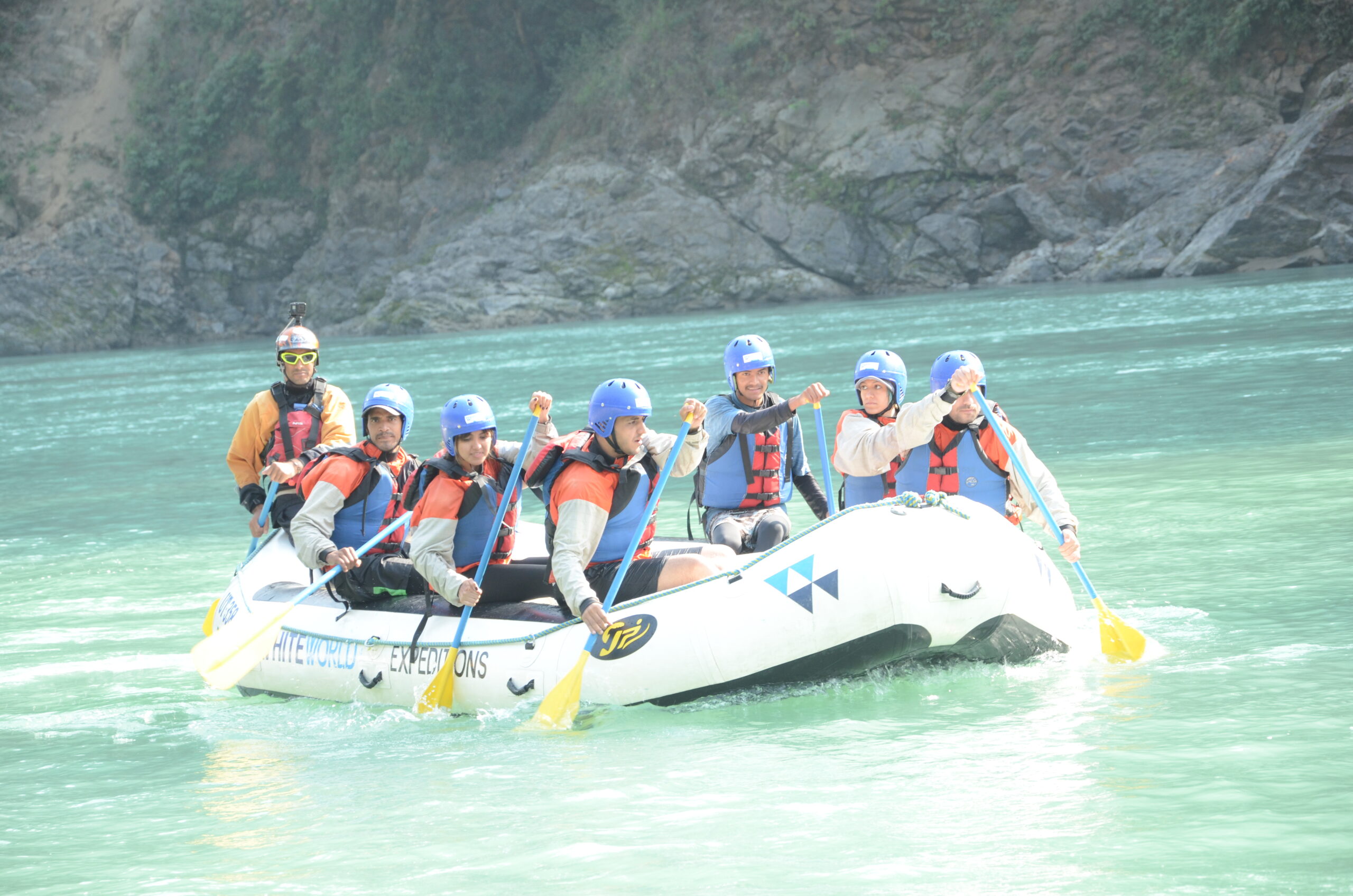
Rafting in Rishikesh is often described as a seasonal activity, but in reality it is a month-sensitive experience. The river does not behave the same way throughout the year, and neither do the surrounding environmental, safety, and operational conditions. Travellers who choose their rafting dates without understanding these month-by-month differences often end up with an experience that does not match their expectations—either because the conditions are too intense, too cold, too crowded, or simply unsuitable for their group.
This guide has been written from an on-ground, operational perspective, informed by how professional rafting in Rishikesh operations function across the year at White World Expeditions. It does not rely on generic tourism claims or surface-level weather information. Instead, it explains how river flow, water temperature, weather stability, crowd behaviour, and safety regulations interact each month to shape the rafting experience.
🎯 Quick Answer: Best Months for Rafting in Rishikesh
October is the best overall month for all types of rafters. March-April is ideal for beginners and families. May offers maximum thrill for adventure seekers. Rafting is closed July to mid-September during monsoon.
📑 Table of Contents
- Understanding the Rafting Season in Rishikesh
- Winter Rafting: January & February
- Spring Rafting: March & April
- Summer Rafting: May & June
- Monsoon Closure: July to Mid-September
- Autumn Rafting: September to November
- December Rafting
- Monthly Comparison Chart
- Choosing the Right Month for You
- Frequently Asked Questions
Understanding the Rafting Season in Rishikesh
Rafting in Rishikesh is governed primarily by Himalayan snowmelt, monsoon rainfall patterns, and safety guidelines enforced by local authorities. While rafting is generally available from late September to early June, not every month within this window is suitable for every type of traveller.
Understanding the nuances of each month is essential, especially for first-time rafters, families, corporate groups, and those combining rafting with camping or other activities.
Winter Rafting in Rishikesh: January & February
❄️ January Rafting Cold Season
January is one of the coldest months for rafting in Rishikesh. River flow during this period is relatively stable, as there is minimal rainfall and limited snowmelt contribution. Rapids remain well-defined and technically manageable, but the primary challenge is water temperature. The Ganga is extremely cold in January, and prolonged exposure can cause rapid heat loss if participants are not adequately prepared.
From an operational standpoint, January rafting requires stricter monitoring of participant endurance and comfort. Our guides often shorten water exposure time and ensure that safety briefings emphasise cold shock awareness.
Best For:
- Experienced rafters comfortable with cold conditions
- Adventure travellers seeking solitude
- Those who prioritise quiet environments over comfort
Not Recommended For:
- First-time rafters
- Children and elderly participants
- Those sensitive to cold water
🌨️ February Rafting Transitional
February offers conditions similar to January, though with slightly improved daytime temperatures. Water temperature remains cold, but air temperature becomes marginally more forgiving, especially during midday rafting slots. The river continues to behave predictably, making February a preferred month for controlled rafting runs and technical training sessions.
Crowds remain limited, and operational pressure is low, allowing our experienced guides to maintain high safety standards without rushing. February is suitable for travellers who value calm surroundings and structured experiences.
Spring Rafting in Rishikesh: March & April (Best for Beginners)
🌸 March Rafting Ideal for Beginners
March marks a significant shift in rafting conditions and is widely regarded by professionals as the beginning of the most balanced rafting phase. Air temperatures rise noticeably, water temperature becomes more tolerable, and the river maintains a steady and predictable flow. The combination of improved comfort and stable rapids makes March particularly suitable for first-time rafters.
From an experience perspective, March allows participants to focus on learning and enjoyment rather than endurance. Our guides are able to spend more time explaining paddling techniques, safety protocols, and river behaviour because crowd pressure has not yet reached peak levels. This improves both safety and confidence, especially for beginners.
Perfect For:
- First-time rafters and beginners
- Couples seeking romantic adventure
- Small groups wanting personalised attention
- Families with older children
🌷 April Rafting Peak Balance
April is one of the most consistently favourable months for rafting in Rishikesh. Weather conditions are warm but not extreme, water temperature is comfortable, and river flow increases slightly, adding energy to the rapids without compromising safety. This month represents a strong balance between thrill and accessibility.
Operationally, April is a high-demand period, and most routes are fully functional. Families with older children, leisure travellers, and those combining rafting with camping or sightseeing often prefer April because it allows for full-day itineraries without excessive physical strain.
Summer Rafting in Rishikesh: May & June (Maximum Thrill)
☀️ May Rafting Peak Thrill
May is the peak rafting month in terms of intensity and activity. Snowmelt from higher Himalayan regions significantly increases river volume and speed, resulting in stronger, more forceful rapids. For thrill seekers, this is when rafting in Rishikesh feels most powerful and dynamic.
However, the heightened thrill comes with trade-offs. Crowd density is at its highest, and operational schedules are tight. Launch points can become congested, and waiting times may increase. Additionally, air temperatures outside the river rise considerably, which can cause fatigue before or after the rafting run.
Best Suited For:
- Physically fit travellers
- Groups of friends seeking adrenaline
- Experienced rafters wanting challenging rapids
- Those who enjoy longer stretches like 36 km Kaudiyala
Less Suitable For:
- Travellers who prefer calm conditions
- Those seeking personalised attention
- Beginners who may feel overwhelmed
🌤️ June Rafting Transitional
June is a transitional month and requires careful planning. Early June often continues the strong rafting conditions seen in May, with energetic rapids and full route availability. However, as the month progresses, weather stability decreases. Pre-monsoon rainfall upstream can lead to sudden changes in river behaviour, forcing temporary suspensions of rafting operations.
From a professional standpoint, June rafting demands flexibility. Travellers are advised to plan rafting early in their trip and maintain buffer days in case of weather-related changes. While early June can offer excellent rafting experiences, late June carries higher uncertainty.
Monsoon Period: Why Rafting is Closed (July to Mid-September)
⚠️ Rafting Officially Closed
From July to mid-September, rafting in Rishikesh is officially closed due to the monsoon. This closure is strictly enforced for safety reasons by Uttarakhand Tourism and local authorities.
Heavy rainfall in the Himalayan catchment area causes rapid and unpredictable increases in water levels, strong currents, and the loss of defined rapid structures. These conditions make rafting unsafe even for highly experienced professionals.
It is important to understand that higher water levels do not equate to better rafting. During the monsoon, the river becomes more like a continuous, fast-moving flow rather than a sequence of navigable rapids. Attempting rafting during this period poses serious risks, and reputable operators do not conduct rafting activities at this time.
Alternative Activities During Monsoon
Travellers visiting Rishikesh during the monsoon should focus on alternative experiences such as:
- Yoga retreats and meditation courses
- Cultural exploration and temple visits
- Ayurvedic treatments and wellness programs
- Guided nature activities where permitted
Autumn Rafting in Rishikesh: September to November (Best Overall)
🍂 Late September Rafting Season Reopening
Rafting typically resumes in late September, following thorough river assessments and safety clearances. The reopening phase is gradual, with selected routes becoming operational first. River conditions during late September are fresh, and the riverbed is often cleaner due to monsoon flushing. However, water flow can still be inconsistent, requiring careful route selection.
Late September is generally more suitable for experienced rafters who are comfortable with variable conditions. Beginners should consult operators closely to ensure that available routes align with their skill level and comfort. Crowd levels remain low during this period.
🏆 October Rafting Best Month Overall
October is widely regarded as the best overall month for rafting in Rishikesh. River flow stabilises, weather conditions are optimal, and water temperature reaches a comfortable balance. All major routes are typically operational, and safety conditions are at their most consistent.
October is suitable for a wide range of travellers, including:
- First-time rafters seeking ideal conditions
- Families with children (14+ years)
- Corporate groups and team outings
- Leisure travellers combining rafting with camping
- Photographers wanting clear Himalayan views
Crowd levels are moderate and well managed, allowing for efficient operations without excessive congestion. From an operational and experiential perspective, October offers the most reliable combination of safety, comfort, and excitement.
🍁 November Rafting Calm & Scenic
November brings a gradual reduction in intensity, but rafting remains enjoyable and safe. The river continues to flow steadily, though the energy of the rapids begins to soften slightly compared to October. Air temperatures are pleasant, and water temperature remains manageable.
This month appeals to travellers who prefer a calmer environment and a more controlled experience. Mature travellers, wellness-focused visitors, and those combining rafting with relaxation-oriented activities often find November ideal. Operational pressure decreases, allowing guides to maintain a personalised approach to safety and instruction.
December Rafting in Rishikesh
🎄 December Rafting Cold but Serene
December marks the return of colder conditions. Water temperature drops significantly, and crowd levels thin out. The overall atmosphere becomes quiet and reflective, with misty mornings and reduced activity along the riverbanks.
December rafting is best suited for experienced rafters and adventure purists who are comfortable with cold exposure and prioritise solitude over comfort. Beginners may still participate under professional guidance, but expectations must be realistic, and proper thermal preparation is essential.
Monthly Comparison: Best Time for Rafting in Rishikesh
| Month | Water Temp | Crowd Level | Best For | Rating |
|---|---|---|---|---|
| January | 5-10°C (Very Cold) | Low | Experienced rafters | ⭐⭐⭐ |
| February | 8-12°C (Cold) | Low | Adventure seekers | ⭐⭐⭐ |
| March | 12-18°C (Comfortable) | Moderate | Beginners & Couples | ⭐⭐⭐⭐⭐ |
| April | 15-20°C (Ideal) | High | Families & Groups | ⭐⭐⭐⭐⭐ |
| May | 18-22°C (Warm) | Very High | Thrill seekers | ⭐⭐⭐⭐ |
| June | 20-24°C (Warm) | High | Flexible travellers | ⭐⭐⭐ |
| July-Sep | N/A | Closed | Not recommended | ❌ Closed |
| October | 15-20°C (Ideal) | Moderate | Everyone | ⭐⭐⭐⭐⭐ |
| November | 12-18°C (Comfortable) | Low-Moderate | Mature travellers | ⭐⭐⭐⭐⭐ |
| December | 8-12°C (Cold) | Low | Adventure purists | ⭐⭐⭐ |
Choosing the Right Month for Your Rishikesh Rafting Trip
When comparing all months, it becomes clear that there is no single best time for rafting in Rishikesh for everyone. The ideal month depends on individual priorities, including experience level, physical comfort, crowd tolerance, and desired intensity.
Quick Recommendations
- Best Overall: October (stable conditions, broad accessibility)
- Best for Beginners: March & April (comfortable introduction)
- Maximum Thrill: May (powerful rapids, peak energy)
- Quiet Experience: Winter months (solitude, challenge)
- Avoid: Monsoon period (July to mid-September)
Choosing the right month is not just about availability. It is about aligning river behaviour, weather conditions, and operational realities with personal expectations. Travellers who make informed decisions based on these factors are far more likely to enjoy a safe, memorable, and rewarding rafting experience in Rishikesh.
Ready to Plan Your Rishikesh Rafting Adventure?
Book with White World Expeditions — 22+ years of experience, IRF certified guides, and the only company offering 84 km multi-day expeditions.
Contact Us →
📞 Call: +91-9411527295 | 📧 Email: info@whiteworldexpeditions.com
Frequently Asked Questions
Rafting in Rishikesh is considered safe when conducted during the official rafting season (September to June) and under the supervision of licensed operators. Safety depends on controlled river flow, trained guides, certified equipment, and adherence to government guidelines. Rafting is suspended during the monsoon because river conditions become unpredictable and unsafe. Travellers should always verify that their operator follows approved safety protocols.
March and April are the most suitable months for first-time rafters. During this period, the weather is comfortable, water temperature is manageable, and river flow remains stable. These conditions allow beginners to enjoy the experience without excessive physical strain or fear, while still experiencing well-defined rapids.
Children (14+ years) and older adults (up to 60 years) can participate in rafting during suitable months such as March, April, and October, provided they meet minimum fitness requirements set by operators. Routes are selected based on safety and difficulty level, and professional guides assess participants before the activity. Winter months and peak thrill periods are generally not recommended for these groups.
Rafting is closed from July to mid-September due to heavy rainfall in the Himalayan catchment area. During this time, river water levels rise rapidly, currents become strong and continuous, and rapids lose their defined structure. These conditions significantly increase risk, making rafting unsafe regardless of experience level. This closure is enforced by Uttarakhand Tourism for public safety.
No, higher water levels do not always mean a better rafting experience. While moderate increases in water flow can enhance rapids, excessive water during monsoon or uncontrolled releases reduces safety and navigability. The best rafting experience comes from balanced river flow, where rapids are well-formed, predictable, and manageable—typically found in October-November and March-April.
Water temperature varies by month: January-February is 5-12°C (very cold, wetsuits essential), March-April is 12-20°C (comfortable), May-June is 18-24°C (warm), October-November is 15-20°C (ideal), December is 8-12°C (cold). We provide wet suits during winter months (November-February) for thermal protection.
October is widely regarded as the best overall month for rafting in Rishikesh. River flow stabilises, weather conditions are optimal, and water temperature reaches a comfortable balance. All major routes are operational, and safety conditions are at their most consistent. October is suitable for first-time rafters, families, corporate groups, and experienced adventurers alike.
May is the peak rafting month for thrill-seekers. Snowmelt from higher Himalayan regions significantly increases river volume and speed, resulting in stronger, more forceful rapids. However, crowd density is at its highest, and air temperatures are hot. May is best suited for physically fit travellers seeking adrenaline-driven experiences.
